
The Turnaround
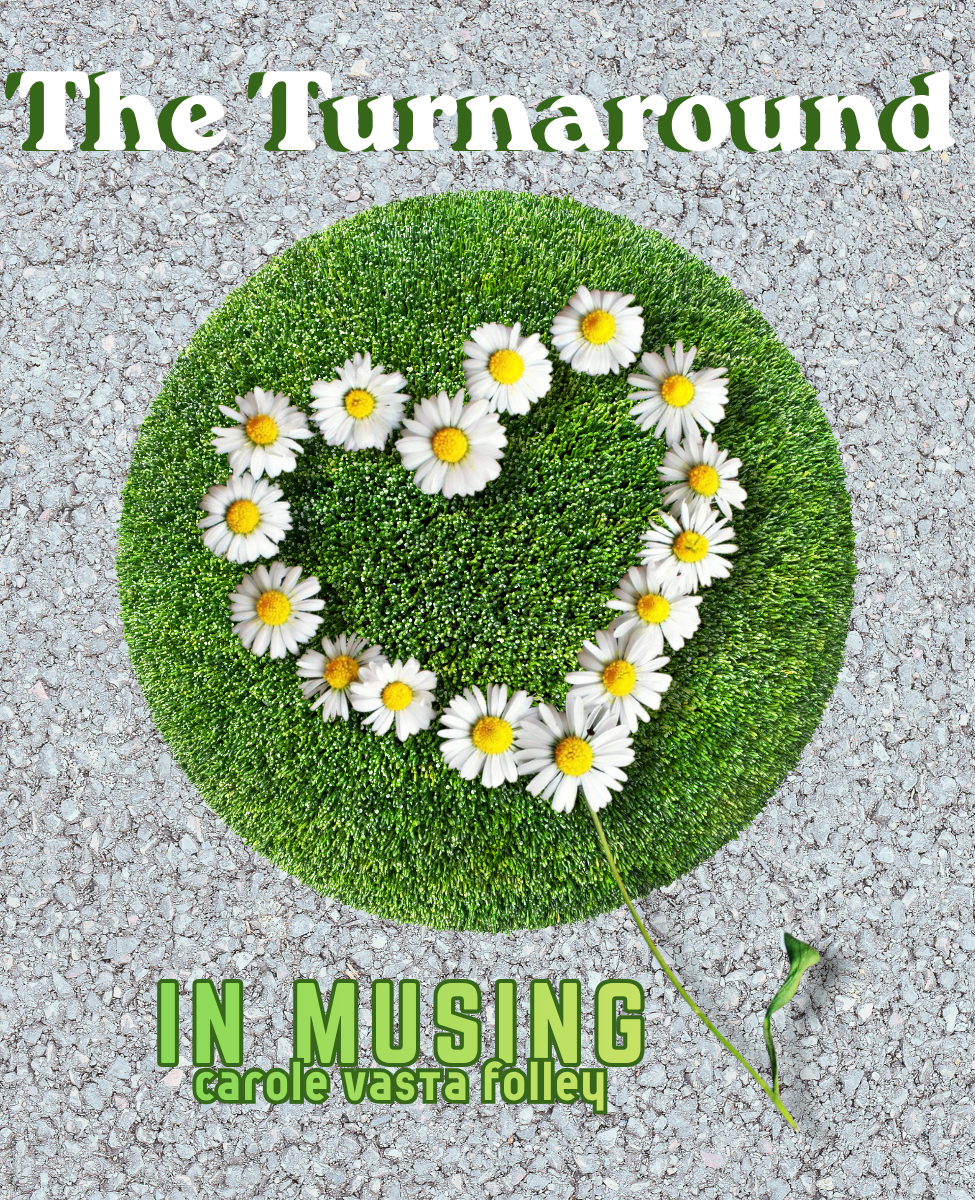
Our cul-de-sac experienced a transformation this year, all thanks to our industrious neighbors Jenn and Cass, who decided to spruce it up. It was an act of generosity and vision that turned a sad circle of grass into something unexpected.
The term cul-de-sac is, of course, borrowed from the French. Who else could express the term’s original anatomical meaning, “a diverticulum ending blindly,” with such flair? After all, doesn’t cul-de-sac have a certain je ne sais quoi, especially when its literal meaning is “bottom of a sack”?
Can you imagine telling visitors, “We’re the house at the bottom of the sack”? Or not to park in the sack? Face it, realtors nationwide must have sighed with relief when cul-de-sac came into use.
Our cul-de-sac used to sport one tree, another trying hard to be a tree, and a large rock besieged by dying Juniper. A shrub commonly used by developers galore as low-maintenance groundcover, these had given up their evergreen and looked more like hellscaping than landscaping, as if fungal blight and root rot were ornamental.
We’d often meet our neighbors on this island of grass surrounded by pavement where we’d talk about our dogs and our lives, generally in that order. And yes, sometimes we’d even discuss the dreary condition of the ground beneath our feet.
That is, until one day this past summer, when out my front window I spied change. The kind that happens when one or two people decide to make a difference. Apparently, that’s all it takes to evoke transformation because possibility engenders passion and, before you know it, your husband gets involved too.
Jenn and Cass began by digging out the dead Juniper and the abundance of weeds that had had their day. Jenn bought and planted gorgeous hydrangeas, rose-colored, coincidentally matching the optimism of their task. Cass planted lavender to bookend the large rock. My guy planted irises, daisies, and mint until his aspirations grew into bushes and trees. Suddenly, there were two crab apples, a lilac, and a Diabolo Ninebark promising burgundy and purple hues for years to come.
Together, the three mulched around the new growth and talked about the kids who’d likely want to jump off the rock. It was decided that pavers were necessary, stepping stones to make easy access for little gymnasts. My husband painted the slabs in vivid colors, one a rainbow, the other a rainbow heart. Both messages of inclusion and unity.
But by far, the most impactful part of the transformation was an old-fashioned hunter-green metal A-frame double swing that Sean helped Cass carry from our neighbors’ backyard to place inside the circle. The swing belonged to Jenn’s parents in years past and harkened to a time when sitting on one evoked iced tea and sunsets. A moment to sit a spell, together.
In an echo of “build it, and they will come,” sure as Kevin Costner’s baseball diamond brought players out of the cornfield, people came. The now welcoming cul-de-sac drew people from our street, nearby streets, and even other neighborhoods. Better still, it brought out families. Parents would swing while watching little ones cavort around and atop the rock. Soon, an extra chair was added. Then older kids came too. Our favorite: a pack of neighborhood boys would congregate regularly, enough so we grew to know them by name and often hung out with them too.
Look out our front window at any hour, light or dark, and the cul-de-sac is alive. It’s a theater of small, human moments. People connecting with nature, with each other, and sometimes, with the quiet space inside themselves.
The trio responsible for this transformation teasingly call it a park. A joke due to the small size of our cul-de-sac circle. But that’s the thing about circles - they widen. As more and more people spent time in this circle, you couldn’t help but see community forming right before our eyes.
Cul-de-sacs are often called dead-ends. But not this one. It is alive and flourishing, cultivating the very connections that bridge the gap from isolation to belonging, all the while turning me into we.